
How to Find Who Owns a Putnam County Property
The statewide assessment result for Putnam County labels its owner field “Current Owner.” Search by street, owner, address, or parcel ID. Note the Root Parcel ID, district, map, and parcel in the result. Ownership in the recorded trail comes from the County Clerk's newest deed instead. Read that deed's grantee and legal description. The tax roll gives the lead; the deed gives the recorded proof.
- Search WV Property Assessment by Putnam County and the address, street, current owner, or parcel number.
- Copy the Current Owner, Root Parcel ID, district, map, parcel, and deed reference.
- Search the latest Putnam County Clerk deed and compare grantee and legal description.
- If an organization is named, check the WV Secretary of State business record, then return to the deed for the land link.
Who Owns a Putnam County Property: July 1 Can Leave the Owner Field Behind
The assessment Viewer updates once a year. A new tax assessment drives the refresh. The Sheriff uses a July 1 cutoff that freezes the name, address, and value behind the next bill, so a purchase recorded after that date can leave the public roll and bill naming the prior owner. For a recent transfer, the newest Clerk deed is the stronger source, while the tax roll keeps supplying the parcel key.
Treat a mismatch as timing, not error. Compare the recorded deed date with the tax year. A deed recorded after the cutoff will simply lag the roll. When the owner field itself needs fixing, the state FAQ sends the question to the local Assessor. Bring deed or survey evidence as appropriate.
Who Owns a Putnam County Property When an LLC Is on the Roll
An owner query around Hurricane once returned LLC names along Teays Valley Road. The same results listed districts 6-Hurricane Corp and 10-Scott District. A city label is not the parcel's district. Copy the entity name exactly. The state business search then offers organization, agent or officer, and record ID. It also offers optional street or county filters. The Hurricane assessment results show why name and district must be read together.
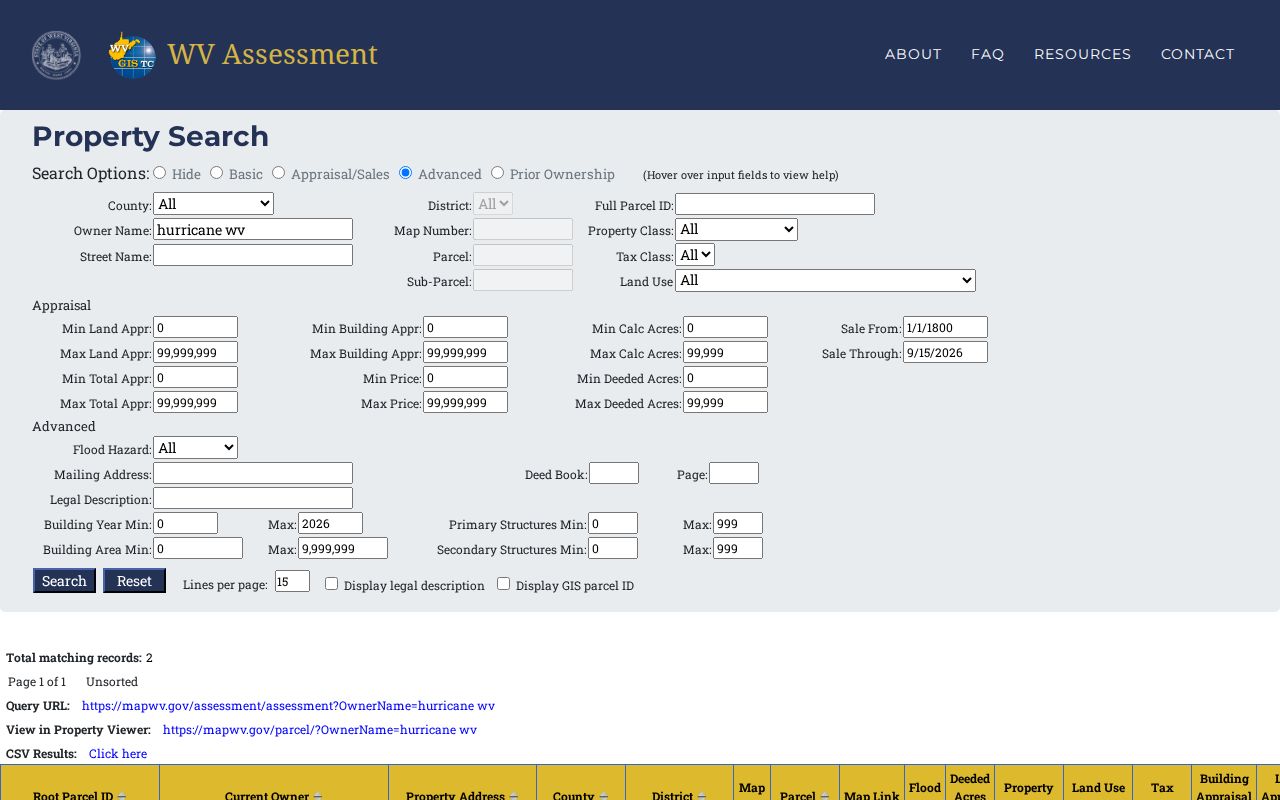
The roll fields identify the entity and district. The deed still connects that entity to a tract.
Who Owns a Putnam County Property: Situs and Mailing Addresses
Putnam County's assessment result shows a Property Address plus a separate Mailing Address field. Tax mail can go far from the land. A company, trust, or absentee owner may list a distant address. Never read the mailing entry as proof of residence. Putnam's 911 Mapping and Addressing office finished a countywide readdressing project by mid-2014. Older deeds and tax cards may therefore carry a former address for the same parcel.
Keep both versions when an address changes. Then compare district, map, parcel, and legal description. A mailing ZIP is a postal route, not a municipal boundary.
Who Owns a Putnam County Property: Four County Record Sources
Putnam County answers ownership with four record sets. Assessment, deed, GIS, and business filings each cover a different slice. No single source settles every parcel question. Read each record's date and purpose, and treat the entity search as context rather than title.
| Source | Owner Info It Gives | Access |
|---|---|---|
| Assessment roll | Current Owner, situs, mailing, district, parcel, and appraisal fields | WV Property Assessment Search |
| County Clerk deed index | Grantor, grantee, recording reference, and instrument image when available | RECORDhub; copy route through Clerk |
| WV SOS entity search | Organization, agent/officer/name, record ID, and filing address clues | Advanced business search; paid CSV option noted |
| WV Property Viewer | Parcel owner link, address, and mapped location context | Public viewer; reference map only |
The owner of record is not the occupant. Title may sit with an LLC, estate, or trust. The roll even keeps a mailing address apart from the property itself. Treat that tax address as a clue for a lawful property matter, never as proof of occupancy.
Who Owns a Putnam County Property: Confirm the Name in a Deed
When the roll and a recent closing disagree, go to the County Clerk's latest deed. Read the named grantee and the legal description. The online RECORDhub gateway is current. Its Putnam-specific form fields and first online year are not published. A missing portal result may need an alternate name search or a clerk request. The deed book and page on the Assessment result guide that Clerk search. Search both party names when available. A surname alone can mislead. For roll timing, see the Putnam County current owner guide. The present owner field gets more depth there.
Who Owns a Putnam County Property: Entity Search Limits
The West Virginia Secretary of State's business record lists an organization's agent or officer. That filing explains the entity. It cannot prove the group owns a specific Putnam County lot. Only the deed and parcel description can do that. Match the exact LLC, corporation, or trust name to the recorded conveyance. If the assessment result shows a mailing address apart from the property, keep both fields separate rather than calling either a home address.
Estate names also change through probate. Putnam's Fiduciary office posts creditor, beneficiary, and closing notices. The deed or court order still governs a transfer. The County Clerk's index path appears in the Putnam County deed records guide.
Who Owns a Putnam County Property: Property Check Details
Putnam County's Clerk links a free Cott Online Property Check service. It sends alerts when land documents are recorded. The signup form, alert fields, covered names, and sample notices are not displayed on the landing page. Check the current options with the office before you rely on alerts. When a transaction matters, pull the newest recorded deed yourself.
An alert only nudges you to look at a filing. It is not a title search. It also cannot promise that every relevant instrument triggers a message.
Putnam County Owner Names and Entity Filings
An assessment line naming an LLC or corporation is only the start. It gives you the owner-of-record label but not the story behind it. Take the exact entity name to the West Virginia Secretary of State organization search. It lets you filter by organization, agent or officer name, record ID, and street or county. Remember that a registered agent is a service contact. The agent may not own, occupy, or control anything. When an entity has renamed itself, run both names. Compare the deed dates on each.
Trusts, estates, and public agencies hold title too. A recorded deed can name a trustee or personal representative empowered to convey. Meanwhile, the assessment page shortens the owner label to a few words. A mailing address or a similar-sounding business proves nothing about a person's role. Match the instrument to the parcel's legal description before drawing conclusions.
Putnam County Owner Records and a Targeted Request
Online sources sometimes fall short. When they do, request the deed or parcel record from the office that keeps it. The West Virginia Freedom of Information Act, W. Va. Code §29B-1-3, generally requires a public body to respond as soon as practicable and no later than five days, excluding weekends and legal holidays. A custodian may charge actual reproduction cost. Search and retrieval fees are not allowed. Help staff by naming the parcel, the owners, the record type, and an approximate date.
Certified deeds, title opinions, and assessment changes each follow a separate office process. The Clerk records instruments and makes copies. The Assessor answers parcel and valuation questions. Keep the requests apart, or one office's reply may get mistaken for a fix in another system's records.
A street clue should start with the Assessor's address or street field. Write down the county, district, map, and parcel values it returns. An owner clue calls for the exact name first. Then check whether the match is a business, trust, estate, or public agency. Confirm the grantee named in the deed itself. A tax-mailing address may belong to a business or an agent, and it says nothing about who lives there. The record tells you who is listed for tax administration, not everything about possession or control.
What a Putnam County Owner Lookup Cannot Tell You
The public roll has limits. It names the owner of record, not the occupant of the house and not any beneficiary hidden behind a trust. A tax lookup is not a title search. West Virginia's Address Confidentiality Program gives qualifying survivors a substitute address for covered government transactions, and separate vital-record, court-seal, and redaction rules further limit what the public can see. Use the records for what they state, nothing more.
Lawful use. Use Putnam County owner records for property due diligence, house history, and civic research. Do not use names or mailing details to stalk, harass, threaten, or intimidate anyone.